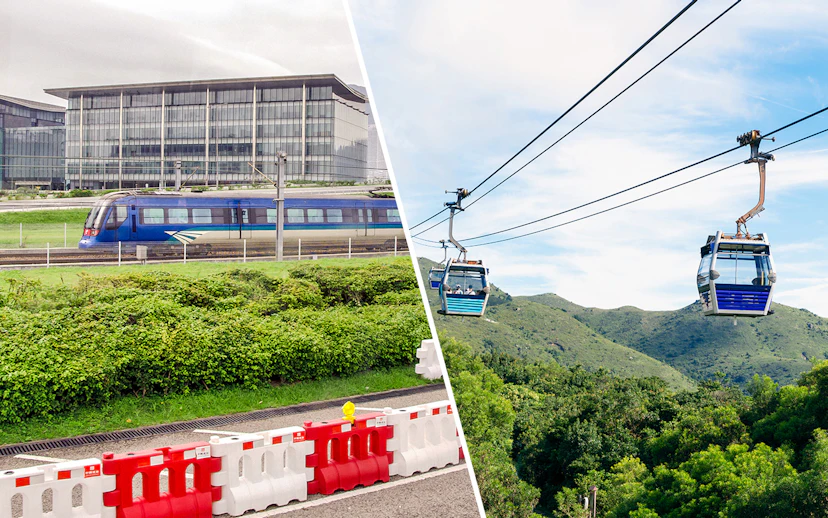
Plan your visit to Ngong Ping 360

Ngong Ping 360 is a cable car attraction best known for its 25-minute ride over Lantau Island to the Tian Tan Buddha and Po Lin Monastery. The visit feels bigger than many people expect because the ride, village, monastery, Buddha platform, and optional trails turn it into a half-day outing, not a quick photo stop. The biggest difference between a smooth visit and a frustrating one is how you handle the queues at Tung Chung. This guide covers timing, entrances, route planning, and ticket choices.

  • When to visit: Monday–Friday generally feels easier than weekends and public holidays. The first 90 minutes after opening are noticeably calmer than 11am–3pm, because late-morning visitors bunch up at Tung Chung and mid-day haze can flatten the views.
  • Getting in: From HK$295 for standard entry. Crystal Cabin access starts from HK$365. You can buy on-site, but weekends, school holidays, Chinese New Year, Easter, and summer dates are much smoother if you book ahead.
  • How long to allow: 3–5 hours for most visitors. Add time if you want the Buddha steps, a monastery meal, Motion 360, or a bus side trip to Tai O.
  • What most people miss: The Wisdom Path and the village’s smaller attractions, especially Walking with Buddha and Motion 360, are the parts many visitors skip after the Buddha and monastery.
  • Is a guide worth it? Yes, if you’re pairing the cable car with Tai O or want Buddhist context; if you only want the ride, Buddha, and monastery, a self-guided visit works well for less.

Jump to what you need

Where and when to go

How do you get to Ngong Ping 360?

Ngong Ping 360 starts in Tung Chung on Lantau Island, next to Tung Chung MTR station and about 35–40 minutes from Central by rail.

Open in Google Maps

  • MTR: Tung Chung Station → 5-minute walk → Follow signs through Citygate Outlets to the cable car terminal.
  • Airport: Hong Kong International Airport → 10–15 minutes by taxi or MTR connection → Useful if you’re fitting it in on an arrival or departure day.
  • Taxi/rideshare: Tung Chung Cable Car Terminal drop-off → 1–2-minute walk → Best if you’re traveling with children or a tight airport schedule.
Location

Which entrance should you use?

There is one main public entrance at the Tung Chung terminal, but the lines are split by cabin type, and that is where most people lose time.

  • Standard Cabin line: For standard and most base round-trip tickets. Expect 20–60 minutes during weekends, holidays, and late mornings.
  • Crystal Cabin/Crystal+ line: For upgraded cabin tickets. Expect a shorter wait on most days, often much faster than the standard queue.
  • Private cabin/priority line: For private-cabin bookings and selected premium access products. Expect the shortest wait of all.

When is Ngong Ping 360 open?

  • Monday–Friday: 10am–6pm
  • Saturday, Sunday, and public holidays: 9am–6:30pm
  • Scheduled maintenance days: Service can change on selected dates
  • Last entry: Check the final departure time posted for the day before joining the queue

When is it busiest? Weekends, public holidays, Chinese New Year, Easter, and summer late mornings are the most congested, with the longest waits building at Tung Chung rather than at the top.

When should you actually go? A first departure on a clear weekday gives you calmer cabins, better photo conditions over the sea and airport, and more breathing room at the Buddha before tour groups arrive.

Timings

How much time do you need?

Visit typeRouteDurationWalking distanceWhat you get

Highlights only

Tung Chung Terminal → cable car → Tian Tan Buddha → Po Lin Monastery → return

2–2.5 hours

~1.5km

You get the ride, the statue, and the monastery, but you’ll move quickly through the village and likely skip the quieter trail sections.

Balanced visit

Tung Chung Terminal → cable car → Ngong Ping Village → Tian Tan Buddha → Po Lin Monastery → Motion 360 or Walking with Buddha → return

3–4 hours

~2.5km

This adds the village and one extra attraction, which makes the plateau feel complete without turning the day into a long march.

Full exploration

Tung Chung Terminal → cable car → Ngong Ping Village → Tian Tan Buddha → Po Lin Monastery → Wisdom Path → village attractions → optional Tai O bus add-on

5+ hours

~4km

You see the scenic, cultural, and quieter parts of the area, but it becomes a genuine half-day to full-day outing and the Buddha steps plus extra walking can feel tiring.

Which Ngong Ping 360 ticket is best for you

Ticket typeWhat's includedBest forPrice range

Cable car round trip (Standard / Crystal / Crystal+)

Round-trip cable car between Tung Chung and Ngong Ping, with choice of standard, glass-floor, or all-glass cabin

A straightforward visit where you want flexibility to explore Ngong Ping Village and the Big Buddha at your own pace, with the option to upgrade the ride experience

From HK$228

Tai O combo (360 Tai O Pass)

Round-trip cable car + Tai O bus transfer + boat ride + snack voucher

A visit where you want to extend beyond Ngong Ping and cover Tai O fishing village without figuring out transport or booking pieces separately

From HK$365

Guided Lantau tour + cable car

Round-trip cable car + guided tour of Ngong Ping, Tai O, Po Lin Monastery + boat ride + transfers

A structured half-day where you want a fixed route, transport handled, and cultural context across Lantau instead of navigating it yourself

From HK$530

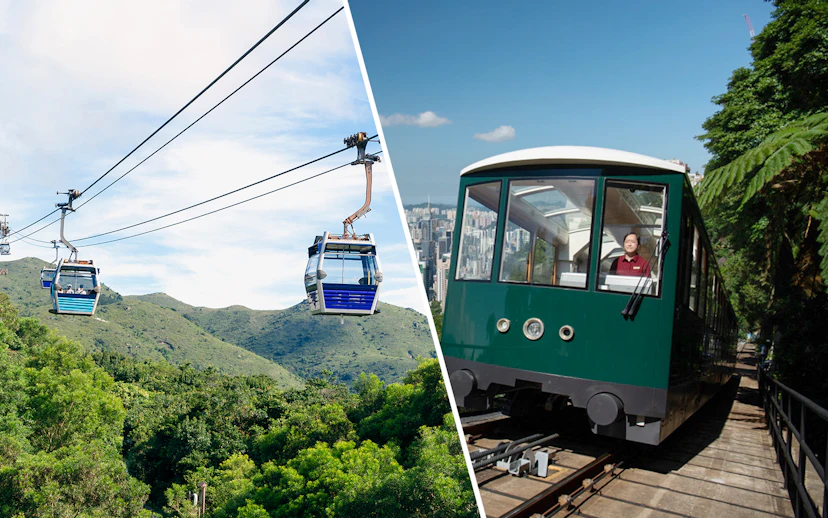
City combo (Peak Tram + Sky Terrace 428)

Cable car ride + one-way Peak Tram + Sky Terrace 428 access

Covering two major Hong Kong viewpoints in one plan, with minimal back-and-forth across the cityCovering two major Hong Kong viewpoints in one plan, with minimal back-and-forth across the city

From HK$351.9

Airport transfer combo (Airport Express + cable car)

One-way Airport Express transfer + round-trip cable car

A plan where you want to combine airport transit with sightseeing instead of making a separate trip later

From HK$343

Open-top bus tour (add-on experience)

24-hour hop-on hop-off access across Lantau routes

Extending your day across Lantau beyond Ngong Ping, especially if you want flexible transport between multiple stops

From HK$150

How do you get around Ngong Ping 360?

Layout and route

Ngong Ping 360 is best explored on foot once you arrive at the top, and most visitors can cover the main plateau in 2–4 hours without rushing. The village sits directly outside the cable car station, with Po Lin Monastery and the Big Buddha a short walk farther on.

  • Ngong Ping Village → shops, restaurants, Motion 360, and Walking with Buddha → budget 30–60 minutes.
  • Po Lin Monastery → temple halls, courtyards, incense, and vegetarian dining → budget 30–45 minutes.
  • Tian Tan Buddha → the main statue platform and wide views over Lantau → budget 30–45 minutes.
  • Wisdom Path → quieter wooded trail with wooden steles → budget 20–30 minutes.

Suggested route: Start with the Buddha and monastery before the mid-day rush, then circle back through the village on the way out; most people do the opposite and end up reaching the main sights when the crowds and haze are both worse.

Maps and navigation tools

  • Map: On-site maps and village boards cover the plateau well → pick one up at the terminal or use the site map before arrival.
  • Signage: Wayfinding is good for the cable car, village, monastery, and Buddha → you only really need a downloaded map if you plan to continue to Wisdom Path or onward hiking routes.
  • Audio guide/app: The visit doesn’t depend on an audioguide → the cultural add-ons are Motion 360 and Walking with Buddha rather than a full navigation app.
  • Large outdoor POIs only: Trail signs cover the short plateau routes → use an offline map if you plan to continue beyond Wisdom Path or connect onward to Tai O.

Pro tip: Do the village last, not first. The shops and exhibits are easiest to dip into on the way back to the terminal, and that sequence saves you from hitting the Buddha steps at the same time as the late-morning crowd.

Ngong Ping 360 Map

What is Ngong Ping 360 worth visiting for?

Crystal Cabin cable car at Ngong Ping 360
Tian Tan Buddha near Ngong Ping Village
Po Lin Monastery courtyard at Ngong Ping
Motion 360 and Walking with Buddha in Ngong Ping Village
Wisdom Path trail near Ngong Ping 360
1/5

Crystal Cabin ride

Ride type: Glass-floor cable car

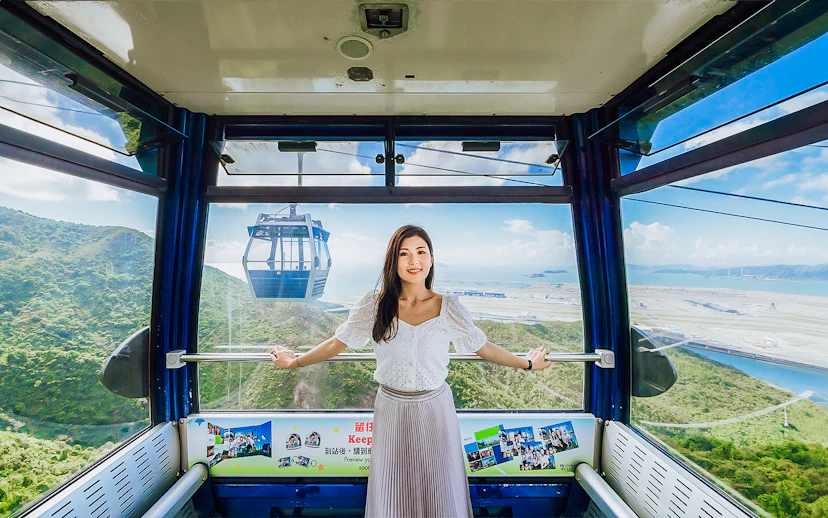
The upgraded cabin changes the ride from scenic transport into the main event. Looking straight down over the green slopes and water adds a real thrill, especially on the longer span where the ground drops away. What many visitors miss is that the Crystal line often moves faster than the standard one, so the upgrade can save time as well as improve the view.

Where to find it: Board at the dedicated Crystal Cabin line inside Tung Chung Cable Car Terminal.

Tian Tan Buddha

Era: Modern bronze Buddha monument

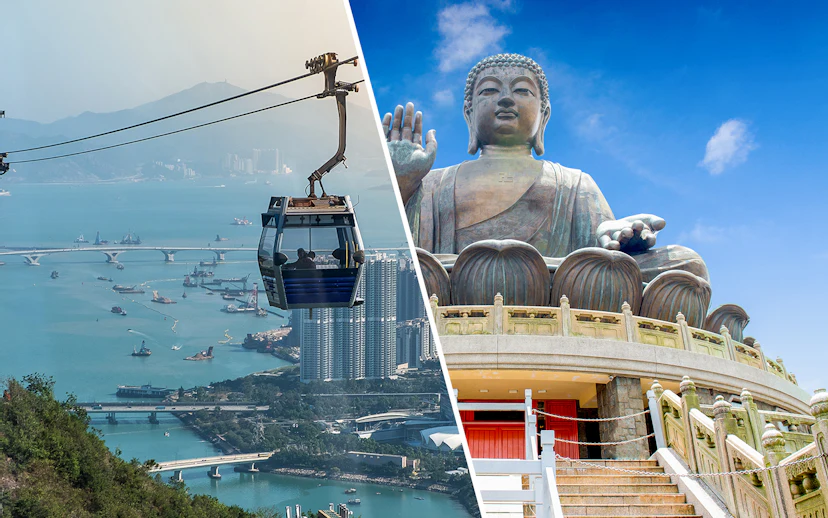
This is the visual anchor of the whole trip, and it still lands even if you’ve seen it in photos before. The scale is what catches people off guard, especially once you climb up and look back across the plateau and surrounding hills. Many visitors take a few photos from the base and leave, but the platform views are the part worth slowing down for.

Where to find it: A 10-minute walk from Ngong Ping Village, beyond Po Lin Monastery.

Po Lin Monastery

Attribute — Religious site: Active Buddhist monastery

Po Lin gives the plateau its real depth, because it turns the visit from a viewpoint stop into something quieter and more grounded. The architecture draws on Song, Ming, and Qing influences, and the main halls feel very different from the commercial energy around the cable car station. Most visitors rush past after seeing the Buddha, but the courtyards and incense-filled spaces are worth 30 minutes on their own.

Where to find it: Directly beside the Tian Tan Buddha approach, a short walk from Ngong Ping Village.

Motion 360 and Walking with Buddha

Creator / format: Multimedia theater and AR cultural experience

These are the attractions that families and first-time visitors overlook because they’re hidden behind the bigger outdoor landmarks. They add indoor time, context, and a useful weather backup if the plateau is hot, humid, or crowded. What people miss most is that they help pace the day better, especially after the Buddha climb and before the return queue.

Where to find it: Inside Ngong Ping Village near the main retail and dining area.

Wisdom Path

Attribute — Landscape/cultural trail: Outdoor contemplative walk

The Wisdom Path is where the plateau finally feels spacious again after the busier monastery zone. It is short, quiet, and lined with wooden steles, which makes it a good reset if the village feels too commercial. Many visitors never get there because they turn back after the Buddha, but it is one of the few places up top that still feels removed from the main crowd flow.

Where to find it: Beyond the monastery and Buddha area, signed from the main pedestrian route.

Facilities and accessibility

  • Cloakroom/lockers: If you’re coming straight from the airport, it’s much easier to store larger luggage before boarding rather than carry it through the cabin and plateau.
  • Restrooms: Restrooms are available around the terminals and plateau, so use the Tung Chung facilities before boarding if the standard line is already building.
  • Cafe/restaurant/food stalls: Ngong Ping Village has 20+ eateries, and Po Lin Monastery’s vegetarian dining hall is the most distinctive meal on the plateau.
  • Gift shop/merchandise: The village shops focus on tea, souvenirs, and Buddha-themed gifts, while the monastery side is better for religious keepsakes.
  • Seating/rest areas: Most of the easy rest stops are in the village plazas and monastery courtyards rather than on the Buddha staircase.
  • First aid/medical station: This is a large managed attraction, but if you need help quickly, the staffed cable car terminals are the most practical first point of contact.
  • Mobility: Tung Chung Terminal, the cable car stations, and Ngong Ping Village are manageable for most wheelchair users, but the Tian Tan Buddha platform requires 268 steps and is not step-free.
  • Visual impairments: The experience is highly visual, so a companion adds real value, especially when moving between the village, monastery, and outdoor paths.
  • Cognitive and sensory needs: Early weekday departures are the easiest option because the terminal is quieter, the queues are shorter, and the main plateau is less noisy than it is from late morning onward.
  • Families and strollers: The village and main paved routes are stroller-friendly, but the Buddha staircase is not, so plan to park the stroller before that section.

Ngong Ping 360 works well with children because the ride itself feels like an attraction, and the village gives you enough breaks between the bigger cultural sights.

  • Time: 3–4 hours is realistic with young children if you keep it to the ride, the village, and either the Buddha or the monastery, rather than trying to do everything.
  • Facilities: The village is the easiest place for snack breaks, bathroom stops, and short rests before or after the longer outdoor sections.
  • Engagement: If attention is fading after the ride, save Motion 360 or lking with Buddha for the middle of the visit rather than the end.
  • Logistics: Bring a small day bag, sun protection, and water, and aim for the first part of the day so children aren’t tackling the plateau in the hottest or most crowded window.
  • After your visit: Citygate Outlets near Tung Chung is the simplest child-friendly stop after the cable car because it is close, indoors, and easy for food.

Rules and restrictions

What you need to know before you go

  • Buy a valid ticket before joining the line, and remember that children up to the age of 11 years should travel with an adult.
  • Dress respectfully if you plan to spend time inside Po Lin Monastery’s worship areas, even though this is not a strict entrance-check site like some major religious landmarks.
  • A round-trip ticket covers 1 journey up and 1 journey down, so once you’ve returned to Tung Chung you’ll need a new ticket to ride again.

Not allowed

  • Food and drink are best kept for the terminals, village, and dining areas rather than the cabin itself.
  • Smoking and vaping are not a good fit inside cabins, stations, or monastery areas, so step away to outdoor designated areas where available.
  • Pets are not part of a typical visit, and anyone traveling with a service animal should check the day’s operating policy before arrival.
  • Do not climb barriers or touch religious displays, because the plateau mixes sightseeing spaces with active places of worship.

Photography

  • Photography is one of the main reasons people come, and outdoor photos are part of the experience on the ride, around the village, and at the Buddha.
  • The main distinction is cultural sensitivity rather than a blanket camera ban: be more restrained inside monastery halls than in the open-air areas.
  • Flash, tripods, and anything bulky are a poor fit in crowded queues, cabins, and worship spaces.

Good to know

  • Weather matters here more than at most Hong Kong attractions, because cloud, haze, or strong winds can change both the view and cable car operations.
  • If you are deciding between price and comfort on a busy day, the cabin upgrade often pays off in saved queue time as much as in scenery.

Practical tips

  • Book a weekday morning slot if you can, because the difference between arriving at opening and arriving around 11am can be the difference between a straightforward boarding process and a 1-hour-plus queue.
  • If you’re torn between Standard and Crystal cabins, think of the upgrade as a time-and-experience decision, not just a photo add-on, because the premium lines usually move faster on crowded days.
  • Don’t burn your energy in the village first; do the Buddha and monastery while your legs are fresh, then use the shops and indoor attractions as your slower final hour.
  • If you’re coming from the airport, travel with a small day bag rather than full luggage, because the whole visit works best as a walking itinerary once you leave the terminal.
  • Eat either before boarding at Tung Chung or after you’ve seen the Buddha and monastery, because stopping for food too early often pushes your main sightseeing into the busiest part of the day.
  • Add about 3 more hours if you want to continue to Tai O, since Bus 21 from Ngong Ping takes roughly 35 minutes each way and turns the outing into a full Lantau day.
  • On humid summer days, the best visibility usually comes earlier rather than later, so photographers should prioritize the ride itself before the mid-day haze thickens.
  • If the weather is unstable, keep some flexibility in your day, because cable car operations can change faster here than at fixed indoor attractions.

What else is worth visiting nearby?

Po Lin Monastery

Distance: 600m — 8-minute walk
Why people combine them: It is part of the same plateau experience, and the monastery gives the cable car ride a cultural payoff instead of leaving it as just a scenic transport link.

Tai O Fishing Village

Distance: 15km — 35 minutes by bus
Why people combine them: It turns Ngong Ping 360 into a fuller Lantau day, with the mountains-and-monastery half balanced by a traditional fishing village and waterfront pace.

Tian Tan Buddha

Distance: 900m — 10-minute walk
Worth knowing: This is the headline sight on the plateau, but the platform views are what make the short uphill walk worth it.

Wisdom Path

Distance: 1.3km — 15–20-minute walk
Worth knowing: It is the quietest worthwhile detour in the area and the best reset if the village feels too crowded or commercial.

Eat, shop and stay near Ngong Ping 360

  • On-site: Po Lin Monastery’s vegetarian dining hall is the most memorable meal option on the plateau, with traditional vegetarian dishes at a mid-range price and a setting that feels more rooted than the village quick-service spots.
  • Ngong Ping Village eateries (2–5-minute walk, Ngong Ping Village): Good for noodles, snacks, coffee, and quick meals when you want convenience more than atmosphere.
  • Citygate Outlets dining zone (5-minute walk from Tung Chung Terminal, 20 Tat Tung Road): Better variety and usually better value if you prefer to eat before boarding or after returning.
  • Tai O waterfront restaurants (35 minutes by bus, Tai O village center): Best if you are extending the day and want a slower seafood lunch after the plateau.
  • Pro tip: If you want the monastery meal, eat after seeing the Buddha and before the village shops, because lunch gets busier once the late-morning cable car arrivals hit the top.
  • Ngong Ping Village souvenir shops: Tea, snacks, Buddha-themed keepsakes, and easy gifts close to the cable car station.
  • Po Lin Monastery shop counters: Better for incense, religious keepsakes, and items that feel more tied to the spiritual side of the visit.
  • Citygate Outlets: Best if you want practical shopping or brand discounts before leaving Tung Chung rather than more souvenirs.

Tung Chung is a practical base, not the most atmospheric one. It works well if you want an early start for Ngong Ping 360, a simple airport connection, or a lower-logistics family overnight. For a longer Hong Kong trip, most travelers will still prefer staying in a more central neighborhood and treating Lantau as a day trip.

  • Price point: Tung Chung usually skews more mid-range and functional than scenic or boutique.
  • Best for: Travelers with an early cable car plan, an airport stopover, or a family schedule that benefits from short transfer times.
  • Consider instead: Central or Tsim Sha Tsui make more sense for most visitors because you get better evening options, easier city sightseeing, and you can still reach Tung Chung by MTR in about 35–40 minutes.

Frequently asked questions about visiting Ngong Ping 360

Most visits take 3–5 hours. That usually covers the cable car ride both ways, Ngong Ping Village, Po Lin Monastery, and the Tian Tan Buddha. If you add Wisdom Path or continue to Tai O, it becomes a half-day to full-day outing.

More reads